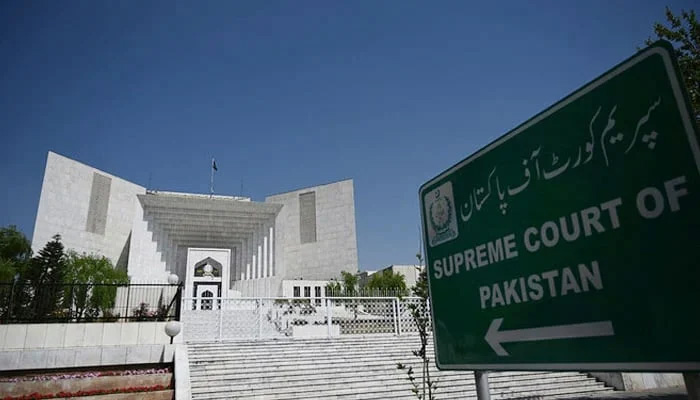
In a significant development for Pakistan’s political landscape, the Supreme Court has nullified its previous interpretation of Article 63(A) of the Constitution, which pertains to the disqualification of lawmakers. The ruling, delivered on October 2, 2024, is seen as a pivotal moment that could reshape the dynamics between political parties and their members.
Background on Article 63(A)
Article 63(A) addresses the issue of disqualification for lawmakers who defy party directives. Previously, the Supreme Court’s interpretation allowed for automatic disqualification if a member voted against their party’s wishes. However, the latest ruling emphasizes that individual lawmakers have the right to act in accordance with their own judgment, thus protecting their autonomy.
Expert Opinions
Legal experts are weighing the implications of this decision. Dr. Sarah Malik, a constitutional law expert, stated, “This ruling safeguards the principle of individual representation. It acknowledges that elected officials should prioritize their constituents’ interests over rigid party lines.” She highlighted that the decision promotes democratic values by encouraging lawmakers to exercise their judgment freely.
Conversely, political analysts express concerns about the potential for increased instability. Arif Khan, a political strategist, warned, “While this ruling may encourage open debate, it could also lead to fragmentation within parties. Lawmakers may shift loyalties, complicating governance.”
Public Reaction
The public response to the ruling has been mixed. Many citizens support the decision, viewing it as a victory for democratic representation. “Finally, our representatives can speak for us without fear of retribution,” said local activist Fatima Hussain. However, others worry about the implications for party cohesion and political stability.
Future Implications
As political parties adapt to this new legal landscape, the ruling is expected to influence party strategies and electoral dynamics leading up to future elections. Analysts believe that parties may need to foster a culture of open dialogue and dissent to accommodate lawmakers’ newfound autonomy.
In summary, the Supreme Court’s nullification of the previous interpretation of Article 63(A) marks a critical juncture in Pakistan’s political evolution. With experts divided on its implications, the coming months will reveal how this decision impacts governance, party dynamics, and the broader democratic framework in the country.
 Oracle Exams